Showing posts with label Outreach. Show all posts

Sunday, June 22, 2014

Caring for our Nation’s Veteran Caregivers - from Homeland Magaine, June 2014


To all:

They are quiet and often unseen. They are strong and resourceful, caring and compassionate. They will roar when needed to obtain the help they need. They are the Caregivers of our nation’s veterans.

Caregivers are the heartbeat of the military family and the backbone of the veteran medical care system.  According to the most recent RAND study, there are 5.5 million military Caregivers in 2014, with 20% caring for veterans of our most recent conflicts.  But, few know they exist.

For a brief moment, imagine a “National Take Your Vet to VA Today” event.  This would be a day where the 1700 VA medical centers, vet clinics, or sites of care would attend to the hourly needs of the veteran to provide the caregiver a single day of respite.  It’s nearly unimaginable given the sheer numbers, isn’t it?  But it would be an excellent visual to show the vital importance and contribution of our veteran Caregivers.

Veteran Caregivers are intrepid; going where others fear to tread in their quest for answers.  They soak up information and education about Invisible Injuries like PTSD (Post Traumatic Stress Disorder) and TBI (Traumatic Brain Injury) and myriad physical and more visible conditions.  They learn to navigate a labyrinthine medical system, all the while reminding medical staff they are an integral part of the care team.  It has been a slow road to understanding in a system that previously focused solely on the veteran, and large bureaucracies are seldom swift change agents.

Caregivers carry a heavy load, and some examples are shocking.  One OIF veteran, raped by another soldier tried to hang himself; he was saved by his caregiver spouse grabbing a chair and raising him on her shoulders to elevate him until EMS arrived.  Another soldier was shot by one of his squad mates in Iraq (the only survivor of four in the room) in Iraq; his caregiver mother could not discuss her situation with anyone due to the investigation.  One caregiver sibling had to explain to the rest of the family that her brother preferred addiction to facing his combat PTSD.  The complexity of caregiving is great, with role changes, steep learning curves, and isolation. 
  
In providing Caregiver Workshops at military installations this year, several common themes emerge.  Though present in most communities and at every military base/post, Caregivers feel invisible and isolated, even from each other. They wish they knew more about how to live with someone with combat injuries, and how to best understand how to help their spouse/adult child/sibling/friend. They are grateful for the Internet, but nothing can take the place of a hug from a peer; someone who has walked in their shoes.  Finally, they realize that helping others also helps them to grieve for what might have been, restores their strength, and empowers them to share what they’ve learned.  Peer support is critical.

We are a generous nation, and we move to fulfill unmet needs.  Most people know a veteran, and some know many.  From this day forward, reach out to help a Caregiver of a veteran of any era.  Our WWII vets have aging and end of life needs, our Vietnam veterans have often shunned formal help until absolutely necessary, and tamped down combat experiences and their aftermath.  Those in Desert Storm and the Gulf wars, Kosovo, Grenada, Kuwait, and so many other places are smaller in number, but not in contribution.  And, for our OIF/OEF/OND veterans, successfully returning home is aided when the community recognizes and supports the entire family.

Proactively offer assistance to a caregiver who may not have the energy to ask, know the power of a smile of understanding, and the ease provided by listening without judgment.  Caregivers will not be alone if we practice outreach, increase awareness, and integrate them with their families more smoothly into the community. It is a matter of respect, compassion, and grace. 


Caregivers, know that you matter and that America is learning to express their support and understanding more each day!

Linda Kreter & the VeteranCaregiver Team

Thursday, August 8, 2013

Seeking Help - Part 1 Reprise

Greetings, friends,

For many of you, the following information will be basic and instinctive to you. We originally posted this in December, and scores of calls and emails are asking the same questions about how to navigate the medical or legislative system, and we thought the following guidance might be helpful.

What do I do when I need caregiver help?

If you are already in the National Caregiver Program, contact your Caregiver Support Coordinator (CSC) at your local VA medical center.  If s/he is not in, ask for the alternate, and leave a voicemail.  It’s a good idea to also follow-up with an email, and their email can usually be found through an Internet search.  You can ask for the email address, and if it’s not forthcoming, ask who else can help you.

If you’re not in the Caregiver Program, you can still use the Caregiver Support Line and request help and guidance.  If your issue is outside the responsibilities of the CSC, then ask who you should be directed to for problem resolution.  It will likely be someone else in the Social Work Office. 

Caregiver Support Line 1-855-260-3274

What do I do when I need help with my Veteran’s medical care?

If you have already spoken with your primary care physician, or in the case of mental health, the psychologist, we suggest contacting various VA advocates.  If your veteran is an OIF/OEF/OND veteran, there is a specific OIF/OEF Coordinator, whose name may be found with an Internet search, a VA website search, or by calling your local VA medical center.  They are often able to cut through issues very simply for you.

If the issue relates to a disagreement over care or other conflict, you would contact the VA Patient Advocate at your local VA.  This person may be found on the VA website, through an Internet search or by calling.  If there is a formal report or complaint to make, ask for the proper forms and be sure to follow all the steps directed so that you will find resolution.  You may need to be quite persistent, and you will need to judge the seriousness of your issue.

What do I do if I need help understanding VA process (paperwork, fee base, etc.)?

The Internet is an excellent source of information, but it may be a huge undertaking to find out the nugget of information needed.  Obtain one of the VA Handbooks on Benefits (you can download it or obtain a hard copy at your local VA) to find out who to talk with for specific needs.  

Why use a VSO?

We also highly recommend contacting one of the chartered Veterans Service Organizations (VSO’s) such as AmVets, Vietnam Vets of America, DAV, the Legion and others.  You can find a list on the va.gov website.  It is highly recommended that you use an organization to help you since VA benefits and processes change with the legislation and it can be a daunting task keeping up with the changes.

The importance of peers is...

Ask your fellow caregivers.  Your peers often have great experiences to share, so post here, write to your friends, and seek out others locally who can provide you practical information.  Seek out others while at the VA and absorb all you can; what you learn will either help you, or others in the future.

This is a starting point...


Linda Kreter & the VeteranCaregiver Team

Thursday, May 24, 2012

Caregiver Jobs & Career Thoughts


Hi friends,

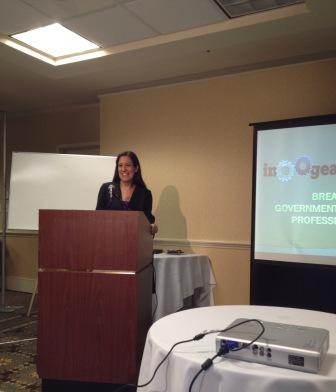
Last Friday, the Chamber of Commerce held the first ever Military Spouse and Caregiver Forum and Hiring Event.  We were very pleased to be included and were on the schedule with Blue Star Families to provide a Caregiver Roundtable.  As it turns out, we worked this more informally than expected, but it was apparent that we need to use every opportunity to educate corporations about the value of hiring caregivers.  As you know, caregiving is on a continuum, and employers will be better able to offer positions with greater understanding of the phases of caregiving. 
Since this was held near Bethesda, the caregivers that attended this event were still actively caregiving at Walter Reed (WRNNMC).  First-stage caregivers are very deeply involved in their service member’s recovery, and possible jobs would need to be supremely flexible; not impossible but challenging.  Importantly, though, this is a very good time to re-tool a resume, learn how to translate your skills into career enhancers, and to review priorities in interests and job choice.  There is also a wide variation of skills and capabilities among caregivers, and an excellent workshop was held for those seeking to resume higher-level professional careers. Again, this is an excellent time to now translate your civilian skills into a possible governmental track, if this appeals to you.

The group that was underrepresented at this event were the caregivers who are now out of the hospital and in the community. At this secondary caregiving stage, we believe those who re-work their resumes and attend such events will find willing and eager employers.  Flexibility, telework, and research are all possible for the stay-at-home caregiver, and VeteranCaregiver and Blue Star Families will continue to discuss the employment potential and value of caregivers to employers wherever we go.  As you view the years ahead, caregiving and treatments will presumably continue to bring forth new options, and taking advantage of these community events is a great first step toward resuming your work, or calling.

One of the most remarkable things to us is that the military community is now purposefully inserting Caregiver elements into nearly all events.  This includes medical care, education, employment, transition, communication, and outreach topics.  In other words, could it actually be that Caregiving has reached the ears of enough people to resonate and expand the military’s perception?  We say a resounding “Yes”!!!  Take advantage of the events around you, re-tool that resume even if you are not ready to use it, talk to employers whenever possible, and realistically consider your options over time.  Just as you thought little medical progress was occurring at the time – remember that you now view great strides from the place you now stand.

Caregivers are emotionally strong, resourceful, loyal, and persistent people.  These attributes make for excellent employees.  Where you are today will not be where you are tomorrow; be ready when the circumstances and opportunity arises.

We support you; let us know how we might help.

Linda


Friday, November 4, 2011

CBS News Caregiver Broadcast

Greetings,
       Here is the promised CBS News video of our treasured friend and her daughter:


       Please spread the word so that Caregivers' needs and challenges are better understood!


Linda