Showing posts with label veterans. Show all posts

Tuesday, February 4, 2020

Let's Renew Together


Caregiving Goes On – Even if VA Information Does Not     

It’s February, and the realization that VeteranCaregiver has postponed creating new videos to support, educate, and even possibly sometimes inspire you hit me hard today.  Creating videos, and voicing thoughts you’ve had and wish you could have gives me joy and purpose.  So, today, we asked you what you want to hear?

Year ago, we began short, personal videos on medical conditions, how to better navigate the VA biosphere (little air in there…), manage the day to day, and the daily fatigue, frustrations, complications, and facts.  The realization that so many are confounded (us too!), that little to no information is forthcoming, and that background turmoil continues and has for so long is disheartening.


So, please share what you’d like to hear about – even if it’s silly, a life-skill like communicating better, or a serious issue that needs addressing, please tell us.  Like you, each day feels better with distinct purpose rather than responding to emails in a vacuum.  😊

It’s time to renew.  Let’s do it together!

Linda Kreter and the VeteranCaregiver Team

Monday, October 29, 2018

Protect Your Family with a Disaster Plan


Have you ever considered what you would do if a disaster struck you and your family? Would you know what to do? Would you take the right step to take to protect your life and that of your family? Many of us assume that disasters only happen rarely and to other people. But unpredictable weather can affect any area of the country, and recently we've witnessed wildfires, tornadoes, floods and other natural disasters in places we least expected.

Although natural disasters can cause catastrophic loss of property and injuries, you can reduce their effect through careful planning and preparation.

The first step to planning a disaster response is to be informed. Especially if you’re new to an area, you should become familiar with its frequent natural disasters. Identify the known risks such as earthquakes, flood zones and frequency of extreme weather. Some information about the area can help you understand some of the initial responses to include in your plan. For example, if you live close to the water, you'll likely want to have a well-thought out plan in the event of a flood. 

Tornadoes are another example. As HomeAdvisor explains, “Although they are mostly associated with the Midwest and “Tornado Alley”, no state is immune to tornadoes. Even sunny California experienced seven of them in 2014. Therefore, it only makes sense to take some precautions and have procedures in place in the event of a tornado.”

After acquiring information about your particular disaster likelihood, the next steps to developing a plan is to consider these four questions with your family and friends:

How will emergency alerts and warnings be transmitted? What is your shelter plan? What is your evacuation route? What is your communication plan?

When answering all these questions, consider any particular needs of your family. Small children, seniors, people with special needs and even pets can all affect how you develop and execute your plan.

Next, consider what sort of supplies you should need if there is a disaster. Creating an emergency preparedness kit is simple, and although you hopefully will never have to use it, it’ll be the best investment you've ever made in the event disaster strikes. Having the following basic supplies can make a life or death difference:

-       Water - 1 gallon per person per day
-       Nonperishable food, such as canned goods
-       Flashlight
-       Battery-operated or hand crank radio and/or phone charger
-       Extra batteries
-       Medications
-       Personal hygiene items

And if disaster strikes, be ready to put your plan into effect. None of these preparations are useful in a state of chaos, so your plan should include designating someone to be in control.

And if a natural disaster hits, consider the impact on your pets as well. Contact your local emergency management office or Humane Society to see if a temporary shelter is available for your animals. Emergency shelters for people impacted by natural disasters can't always accept displaced animals, so your plan should provide for their care.

You can also reach out to friends and family members who aren’t affected by the disaster to see if they could temporarily house your pets. Other options include making a list of pet-friendly hotels in your area in case you have to find shelter quickly for the entire family.

When natural disasters occur, all too often victims are unprepared, believing that such calamities only happen to other people in other areas. Be prepared for these events, no matter how unlikely. It may be the best plan you ever put to paper.

Bradley Davis
www.DisasterWeb.net 

Thursday, March 2, 2017

VA Caregiver Program Changes & Awareness Recommendations

Points of new awareness about the VA Caregiver Program:

Please be certain to research beyond private, secret, and open Caregiver Communities on social media.  Rumors can spread like wildfire, even when the information is not accurate.  Rising anxiety levels within the family rarely does anyone good.  Find out the facts first.  Note that VeteranCaregiver goes directly to the VA Central Office with questions raised on specific processes, caregiver law, and changes.  The answers are not always clear and often raise more questions -- but these are direct responses from Caregiver Program Leadership.  

Something one Caregiver Support Coordinator tells you does not always confirm national guidance.  Each VISN has the flexibility to implement the program (*within the parameters of the Caregiver law*) differently.  We already posted the official response to new phrases used in 2016 regarding “short-term recovery program”, “graduation”, and the significant reductions in Tier 3 caregiving.  According to the VA, there are no quotas, no changes in eligibility requirements, and no changes in ADL measurement. Note possible discrepancies to the law, with date, person, VAMC, requests for clarification in writing and attach a Read Receipt to the short message.

ADL’s still form the basis for eligibility, as do safety and protection elements.  Here is an excellent example of the detail you may need to explain about only a single ADL:  bathing independently.  See below and other questions and responses may be found on www.VeteranCaregiver.com’s website in the “Ask Questions Here” section on the Homepage:

I’M CONFUSED ABOUT ADL’S. JUST USING BATHING AS AN EXAMPLE, MY WW HAS DIZZINESS, BALANCE, LIMITED RANGE OF MOTION THROUGH BACK AND UPPER BODY WITH CHRONIC PAIN. HE CANNOT WASH BY HIMSELF, YET THE CGC SAYS SINCE HE SITS IN THE SHOWER BY HIMSELF, HE CAN BATHE WITHOUT HELP. NOT TRUE! HE CANNOT WASH HIS HAIR SINCE HE CANNOT RAISE HIS ARMS. HE CANNOT WASH HIS BACK, BUTT, OR BACKS OF LEGS SINCE HE FALLS OFF STOOL IF HE RAISES ONE LEG TO REACH THE OTHER. HOW IS THIS NOT NEEDING ASSISTANCE?
This is a great example of when detail explains what the needs are. If you haven’t already, write all this down, since if the questions are not asked about detail, then assumptions are made. What you describe fits the definition of needing assistance with bathing, but if the right questions aren’t asked, or the vet glosses over his not wanting to say personal details, there is a chance that this will be overlooked. Write this up and ask that the evaluator/RN/PCM add it to his medical records.

If you need to appeal a VA decision, you will need to know the precise reasons to address points specifically in your appeals documentation.  Appeal justification is best explained using language similar to the clinical language provided to you as the reasons for the caregiver program change in status.  Specific points, evidence, and documentation is best delivered in a succinct document, and excess emotion removed. Abusive language is not advised even if you feel it is warranted.

Appeals timing of document submission will vary from VAMC to VAMC, but will be shared with you upon request.  Also ask specifically for "confirmation of the receipt of the documents for appeal", and again request "confirmation that the Appeals Panel reviewed the materials prior to their decision" in writing.  Note the timing of decision letters and the receipt of documents.

There are separate VA non-medical databases that contain feedback on the caregiver and veteran.  This information may not be available to those reviewing appeals, and request copies of both the Patient Advocate Tracking System (PATS) notes, and any Caregiver Application Tracking System (CATS) notes.  (This may mean a FOIA request.) The noted information may be used for decisions and unless you’ve verified the information is correct, or that information is missing, your status may be adversely affected.  It appears that access to this information varies per VAMC.

The specific reasons for Caregiver Program reduction or termination" will be explained to you in a transparent, understandable manner" per VACO.  It’s best to receive this in writing, and we have seen only a single VA do this in the status change letter.  You may request to record a Skype call if you’re far from the VA and a meeting is offered, and you may request to tape a meeting for an in-person meeting.  We recommend responses in writing so you can review and compare to your veteran’s needs, the responses used for the decision, if records were changed or missing, and to determine your response.

Trust, but verify information.  It is very possible to receive a VA response that is accurate, but literal.  If you don’t receive direct answers to questions, rephrase them politely in an email and request clarification of the response.  It should not be necessary when direct responses and transparency would be more efficient, but ... Make use of an outside advocate (AW2, Legion, AMVETS, etc.) when in doubt.

Please stay informed, use trusted resources and advocates, and know how absolutely vital caregivers are to the care of our nation’s wounded, ill, and injured.  We will continue to post direct VACO Caregiver Program responses to your questions for your increased awareness.

Linda Kreter & the VeteranCaregiver Team


Thursday, June 9, 2016

Plan Ahead with a PTSD Alert Signal

Let’s talk about PTSD and triggers – and a way to communicate ahead of a full-blown anxiety situation.  As you become more familiar with what causes situations to move toward a negative situation, or a rising sense of foreboding, you’ll likely learn what triggers set off you or your family member.  Yes, it’s important to include you in this equation, since many caregivers also have accumulated symptoms of secondary PTS, and the resultant hypervigilance, mood changes, effects of insomnia, and stress.

Working together as a team, a family can learn to mitigate certain situations, such as crowds, loud and volatile situations, including family holiday dinners.  Creating a non-verbal signal puts you and your family member in charge of alerting one another.  Keep it simple, a tap on your wrist, a hand signal or perfect the Let’s-Get-Out-of-Here-Soon glance.  Demonstrating that you understand your family member (or you) are feeling rising anxiety, stress, or discomfort with the situation is helpful and allows you to more gracefully depart most situations promptly.  What a relief to avoid gutting out every difficult occasion! 

Recently, I heard a wonderful follow-up to this trigger signal by a smart and thoughtful caregiver named Lauren.  After these signals are given, departure is complete, when the next quiet moment comes, she and her husband engage in a short discussion.  Either one asks: First, are YOU okay?  Second, is the Situation okay now? And, Third and most important, Are WE okay?  This is a strong team effort that is kind and intuitive.


Take time this week to create your own PTS Alert Signal, practice it until the all feel united and comfortable, then consider asking those three key questions to keep the calm channels of communication open and willing. 

Linda Kreter & the
VeteranCaregiver Team

Monday, February 22, 2016

The Positive Efffect of Pets

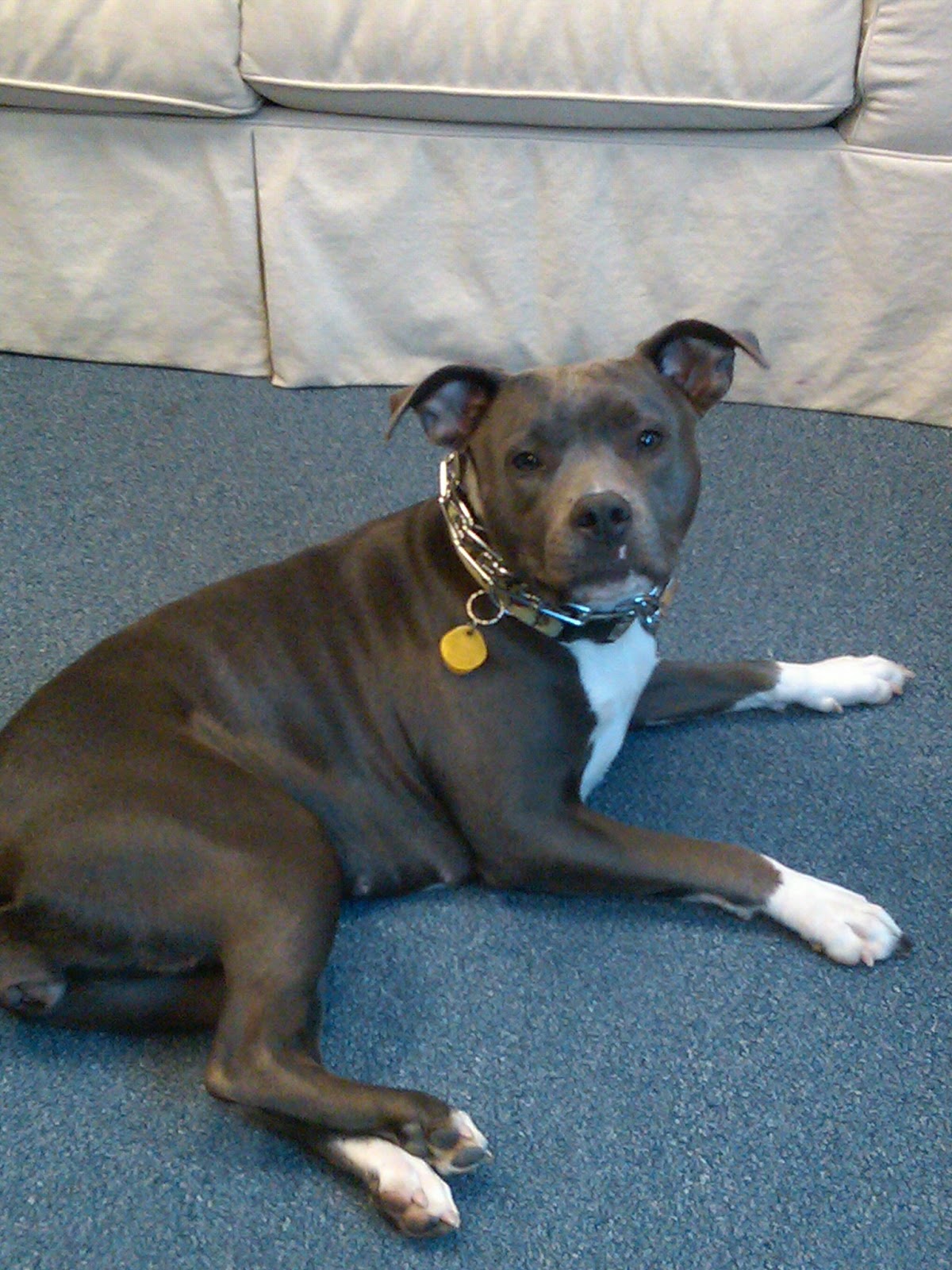
Pets matter.  They make our lives richer.  Pets can play a unique role in our lives, providing unconditional love, reducing anxiety, and releasing stress.  If you’ve been wondering about getting a pet during your caregiver journey, consider that science supports pets as providing a calming, balancing, and enjoyable relationship.  

Those in the healing arts know that pets make a positive physical and psychological difference for many.  For decades, retirement homes, cancer wards, rehab centers, and children’s hospitals are just a few venues where animal visits are the highlight of the week and eagerly anticipated.  The simple act of petting an animal can rapidly reduce stress and promote calm.  Soothing.  Comforting.  Pets are often cherished.

Sweet girl - protective & wise
We’ll stick here to the common dog and cat pet choices.   You’ll hear people express they are a “dog person”, or a “cat person” for a variety of reasons, but both can make wonderful pets.  Dogs have a wonderful ability to “read” your moods, understand certain words, provide comfort and a canniness to read your mind when you need a non-judgmental guide to listen to you mull over a problem. Cats also sense your moods, will sleep trustingly even as you talk to them, and purr as they curl beside you. When you need an extra measure of hope, warmth, and kindness, cats are low maintenance and exercise on their own.  Most dogs and cats are social animals and want to be around people and follow you everywhere if you’ll let them.

No matter your animal preference, talking with such a great listener who doesn’t interrupt you, doesn’t judge you, and who is always there for you means a lot.  Another benefit to a pet is that taking care of something else takes you outside yourself.  This animal needs you, and can create a routine interaction that automatically helps with reducing depression and lowering anxiety.  Walking a dog gets you out of the house at least twice a day, providing exercise and socialization, sparking conversation. Pets energize you, make you laugh out loud and can bridge loneliness and isolation. Facebook is filled with silly home videos of pets with thousands of views; they fill a need in our souls. 
A purring machine & cuddler


Animals are genuine, they don’t gossip, they rely upon you while giving you stress relief, laughter, empathy, companionship, and unconditional love.  There is great power in pets, so go ahead, talk to your animals, they’ll love you all the more – and it’s great therapy without an appointment and immediate.  Consider THAT for a moment…

Linda Kreter & the
VeteranCaregiver Team


Monday, November 16, 2015

Medication Management 101 for Veteran Caregivers

VeteranCaregiver received this message recently:  “Hi, I'm new to this [caregiving] and yet, I'm thrown in the deep end and need to manage 19 daily medications; can you help? No one will help me manage this now that we’re home!”

This is a challenge many caregivers confront and you are not alone.  There was even a television news photo (below) of a plastic grocery bag of meds for a single month – now that's a visual!  Many veterans are on multiple medications and as caregiver, keeping track of the medications is one thing, and tracking the effects of them is another.  It’s critical to start at the beginning:  create a Medication Log.  If you are hurt, absent, or sick, someone else may need to step in, so this is not an empty exercise.
CBS News Image 2014
You probably have a notebook, binder, or journal you keep appointments in, or some way to track this medical journey.  Add to your system the Medication Log, and note the drugs, dosages, time of day to take, and learn what each medication is for.  There are many good apps that consolidate this information for you.   In the large medical bureaucracy, and with the lack of fully centralized records, share this Medication Log at appointments to be sure each practitioner knows of the med prescriptions.  Every time a drug is changed, dosage adjusted, or medication removed, keep an eye out for any changes in behavior that might be connected.  YOU are the one living with the vet day in, day out, and you'll notice these things sooner than anyone.   

It’s important to know that meds mailed to your home should be called in earlier than needed to allow for on-time delivery, and be especially aware of months with 31 days in them with an automated system. If the 30th is on a Friday, it has happened that the mailed prescriptions may arrive after the weekend, meaning that well-managed pain or other condition under control will now go untreated until Monday.   Request a contact to call if more urgent behavioral or physical effects to medication occur; this can help you avoid a trip to the emergency room. 

Be aware that if you relocate to another VA that the medications may change, which means you'll be keeping track of changed meds, dosages, or differences in the drug formulary (if there are any). 

Keep a copy of the medication list in a set place in case something happens to you and someone else must step in to assist.  Over time, using a watch, alarm clock, or a smartphone, it may be possible to create more independence with your family member as they schedule and remind themselves of medications and timing. With planning, communication, and observation, managing medications and noting their effects will help convey important messages to the care team.

Linda Kreter & the
VeteranCaregiver Team

Monday, July 27, 2015

Leadership Skills & Personal Growth

You probably don’t sit around a lot (if at all!) thinking about your leadership skills.  But, what if you could grow your skills by viewing life in a new way?  You're already on the path to learning new skills to be the best caregiver possible, so consider your value. 

You navigate the medical maze.  You research and communicate to a care team and your family member about medications, appointments, mobility logistics, and scheduling.  Aren’t you the "leader of the pack" for caregiving in your family? 

John C. Maxwell, the leadership expert defines Leadership as Influence.  Your ability to consider your tasks from the perspective of your value and influence is powerful.  Science has shown that seeing situations and communications positively can lead to better outcomes.  And, improving your communication skills (tone, presence, body language, preparation and more) feels better when you view yourself as “someone to reckon with” due to your skills.  This is growing your leadership skills and mindset.  

Positively framing your thoughts leads to personal growth and an evolving positive perspective when practiced mindfully.  Wonderfully too, Leadership Skills can be developed at the pace you choose.  You cannot always change the situation around you, but you can change your reaction and response to it.

There is enormous value in being able to express yourself well and to show in subtle ways you are resourceful, knowledgeable and worth listening to as a caregiver. The confidence with becoming a more assured Leader will help you in every aspect of your lives.  

Sometimes it takes someone else to state what you don't yet believe, but the caregivers we know are strong, smart, solutions-oriented, and care warriors.  To help, take a look at any of the books on the www.VeteranCaregiver.com Recommended Reading section; just 10 pages or 10 minutes listening a day can change your life for the better.

We strongly believe in you!  

Linda Kreter & the
VeteranCaregiver Team
Tuesday, May 5, 2015

LEAD: Self-Development

Caregivers of all eras say they miss their personal time to learn and remain sharp and inquisitive.  How do you find the time to keep growing intellectually, when caregiving is your priority?

A path of life-long learning keeps you sharper and more engaged, though caregivers often feel too weary or too constrained to begin.  First, know that you are learning each day as you walk this caregiver journey, and the skills you nurture along the way will eventually be clear and valuable to you when you look back.

As you consider one day at a time, begin a mind-shift to seek those small pockets of time that might be possible for you. There are some powerful “time-suckers” in each day, but if you can find even 15 minutes you devote to yourself, you will feel empowered.  Feel guilty?  Try not to, as small bits of respite time improve your caregiving.  There’s a good reason that on an airplane, the flight attendant tells you to put the oxygen mask on yourself before helping others. Yes, there are times this is impossible, but if you make the choice to find that small pocket of time, you won’t be as drained.  Hope is an energizer.

Reading quietly may challenge, but try turning your drive times into a mobile leadership class with an audio book.  That waiting time at the VA?  Listen to 15 minutes of good content or about a topic you care about. Turn your otherwise “wasted time” into a learning university.  You can download audio books free from the public library and listen to 15 minutes of meditation, your topic of interest, leadership or inspirational messages.

Leadership expert, Jim Rohn says that if you spend more time working on yourself than your job (caregiving), that the rest of your life is altered positively by what you've learned.  As you become involved in learning new things, you are also more inclined to talk about them and move outside your personal shell or bubble.  Sharing those thoughts with others spurs engagement and may inspire them to think differently too.  Sharing your new knowledge or perspective is reinforced by voicing it to someone else.  It's growth!

Think of yourself as a hermit crab who lives in a shell that fits his size.  Isn't it time you grew in learning new ways to think, vary your viewpoint, and learn empowering, positive skills - in your spare moments?  Be the hermit crab that grows to need a larger shell and grow during every phase of your life!

Linda Kreter & 
VeteranCaregiver Team

Thursday, April 30, 2015

LEARN: Navigating the Military Medical System, Part 1

Navigating an enormous medical bureaucracy is not simple, but it helps if you know some basic elements to begin.  While you may not have raised your right hand and taken an oath, you now are part of the military medical system.  (More about the pros/cons of that role in another blogpost.) 

If you're new to the military system, there is an entirely new language of acronyms and chain of command to understand.  You’ll become familiar with these terms and learn them over time, but as the caregiver and advocate, your role is to support the best communication and care possible for your family member. 

Excellent communication is critical, especially at the acute stage of an injury when things are moving very fast and you are still reeling from that phone call.  If you're an older caregiver and haven't had to deal with the military medical system for years, you also have a sharp learning curve, but ask questions and keep asking them until you obtain an answer.

Practice proactive documentation.  Create a notebook or carry a journal and keep it accessible.  Record all appointments, referrals, visits, names, dates, care team changes, and new appointments or practitioners. This notebook or series of journals becomes your documented timeline and invaluable since it recalls details for you when you’re exhausted, overwhelmed, or have been in the medical system a long time.


Keep medical records on a thumb drive besides using the paper, images, and electronic records both the DoD and VA use.  Recognize that though changes are coming, there is not yet a seamless transition between both agencies and the records don't consistently mesh with each other. 

After a care team phone call, or an inquiry call you make, follow it with a brief email summarizing the call and any action steps.  You may not feel it necessary at the time, but be wise.  Staff changes, miscommunication and misunderstandings can be avoided or mitigated if you have detailed, accurate records.


Remain calm and civil.  You’ll receive better communication and sometimes, better care if you do.  Burning bridges with those whom you need to help you and your family is a very poor choice.  You are vital to good care, and with proper documentation of your communications and records, there is seldom a problem that cannot be resolved.  Be conscientious and prepared, and you're a step ahead!

Linda Kreter & 
VeteranCaregiver Team

Thursday, May 23, 2013

Follow-Up is VITAL...


Greetings,

Today's issue:  Follow-up is critical to resolving caregiver and vet/warrior problems.

Yet, it is so very, very difficult to “encourage” follow-up or to escalate the issue(s) because it’s often a case of “Shoot the Messenger”.  Not good. 

There are many unresolved issues we could write about here, but our goal is not to point fingers.  We do, however, want to voice that most problems are best solved while they are small and manageable.  Left hanging, caregivers and vets/warriors become increasingly frustrated, with some descending into depression and high anxiety with no way to receive an answer to a question.  When caregivers direct their questions to a superior, they are often told that they are overstepping, that they should accept that the system is slow, and to “wait their turn”.  Problems grow and ferment. 


 Not good.  There is a better way to manage this for both sides.

We implore the system to consider making customer service a priority – for medical and mental health reasons.  A callback or email is proof that someone cares.  Most of the time, the healthcare provider would not receive 4-6 reminder voicemails if they made a quick return call or email to alert the caller that they are looking into their problem and when to expect a response.    And, if a response time is provided to a caregiver or veteran, they should then refrain from repeat calls and messages and await the response.  Just think, fewer voicemail boxes full and not accepting messages!  Setting expectations is both a courteous and safe alternative to a stressed system.

We all have 24 hours in each day and make choices on how to spend that time.  If overall communication is improved, it would go a long way toward making more of those work hours productive and efficient.  Can we please make a commitment to work on this?

Thanks to countless caregivers and vets for their input and feedback to providing a potential solution to this growing challenge.

Warm regards,


Linda Kreter & the VeteranCaregiver Team

Friday, May 4, 2012

Ahh, PTSD Awareness & Compassion Shown!


Greetings, friends,

One of my favorite Caregivers called today with a story of a great out-in-public experience.  Her husband, a veteran with moderate to severe PTSD wanted to go to the midnight showing of the new movie, The Avengers last night.  She was surprised, and also glad.  How very normal!  She immediately began mentally considering the environment:  they knew the building, the exits, the parking, the ticket line, but surely the crowds on opening night would be daunting?  Quick discussion: he really wanted to make the effort, so on they went.

The theatre and surrounding area was packed with people and after she’d bought the tickets, her vet started to become fairly agitated.  Since she’d been planning in her mind for the past hour, she easily located the manager and explained that her husband was a combat veteran with PTSD, and would he possibly help them?  The manager asked what specifically disturbed him?  She replied:  the crowd, needing a seat near the exit, some sounds, and the hope of not disturbing others.  His face cleared, and he said:  “Oh, like Captain America!”  (Captain America was the star character of a World War II movie of a veteran who was frozen in time, but when he “came back” years later, he had these same PTSD reactions and went on to become a super-hero.) 
The manager immediately asked a few smart questions, then guided them to the smallest of the many theatres, found them seats apart from others yet with clear access to the exit, and also said that if they needed to leave, he would comp their tickets.  He even went on to say that if there were a group of vets in the area who wanted to view the movie together that they would be glad to arrange it at a quieter time!

The loved the movie.  They were grateful to the manager.  And, mostly, they loved the outlook that (unlike the recent media sensationalism of PTSD), this veteran was compared to Captain America – a character that had been changed by his military service – but who was regarded as a Hero.  

Bottom line:  with calm planning, informing others of their needs, and a blessing in the form of a wonderful theatre manager, a wonderful movie night was enjoyed by all!

May you all enjoy a Captain America experience very soon,

Linda 

Thursday, April 19, 2012

Final Honors, the Flag, and Courage!

Greetings,  we have such a good story to tell you! 

There once was a very brave soldier who suffered extensively from debilitating PTSD and an extended, rugged journey to recovery.  Very recently, through an usual and very effective team effort, an alternative, comprehensive PTSD program significantly changed her perspective, her health, and indeed her life.  Throughout the long PTSD journey, however, nothing had ever gotten in the way of honoring her fellow battle buddies.  She volunteered her time as a bugler for Military Funeral Honors Corps, met with families, reached out to veterans at public events, and each time overrode her own severe discomfort with being among crowds.  Even with occasional setbacks, she always persevered and stretched to do the right thing.

Yesterday was one of those days.  In her home state of Missouri, a soldier had died in Afghanistan and Governor Nixon had ordered that all flags were to be at half-mast to honor him on the day of his funeral.  This was a law enacted in January 2011, and was to include all flags on all properties to include federal properties. 

The funeral of the fallen soldier was held yesterday 1300 hours at Jefferson Barracks National Cemetery, and though other flags were at half-mast throughout the state, the one at the VA post where the funeral took place was not.  This appalled her.  So, she went into the VA building and asked who was in charge of the flag?  A man answered that he was.  She asked why the flag wasn’t at half-mast?  He answered that it was federal property and “go tell someone else your problem”.  She left the building, went out to the flag pole marking the Path of Honor (where several veterans were sitting) and personally lowered the flag to half-mast.  She did this as a gesture of respect, honor, and in keeping with protocol.  The veterans present applauded her efforts.

However, the VA police were called and they said they would have to arrest her.  She asked, what law did she break?  She was told again that the VA was federal property and didn’t need to comply with the Governor’s request, though this is untrue.  The police repeated that she would be arrested – in fact, five  policemen surrounded her.  Remember, she suffers from severe PTSD.  She held her ground, deeply upset. Words were exchanged, but one of the policemen said he was also a veteran, and told her he understood honors and respect for a fallen comrade.  She agreed to leave and was not arrested.  Moments later, the flag was again raised to the top.  Her mission was accomplished - Corporal White was honored through the actions of this faithful soldier.

In our opinion, this veteran, a former Volunteer of the Year by the city Police Department, one of four buglers in the state of Missouri to assist at military funerals, and a solid battle buddy to the core deserves a commendation for this patriotic action.  She has been deeply effected by her service to this country, but she put herself at considerable health risk to provide honor and dignity to one who had paid the ultimate price. 

This blog posting is dedicated to Bonnie Casler, MSG, USA (Ret). 

Very respectfully,

Linda

Friday, March 16, 2012

The Value of the Written Word

Over the past few weeks I have received a lot of mail from various people in pretty high positions in the Government and the military as well as in various business categories. I have noticed an alarming trend in many of these which is to ignore writing errors. Spelling has flown out the window; punctuation is so bad that in some cases it is almost impossible to know the intention of the writer; and often they change tense or subject within the same sentence. I know we all make occasional mistakes, but for the most part, these are a one-off error. One error in message can be overlooked, twenty such errors are just careless and to my mind disrespectful of the recipient.

I know from my many years as a writer and an advocate that to be able to write a good and coherent letter, regardless of whether it is in the form of an email or snail-mail, makes the best impact on the reader. When mistakes are made, sometimes glaring mistakes, it lowers the credibility of the writer. Years ago, before we had computers to do so much for us, we relied on a dictionary and our own skills from our school days. There was then some excuse for poor writing skills, as not everyone had the advantage of good schooling. However, there is little excuse now, as even the most rudimentary word processing program has a spell checker and some type of correction for correct syntax.

The point I am making here is that in communication with anyone, either at the VA, the DoD or your Congressman, good writing is essential if you wish to appear a competent caregiver. I understand that for some, dyslexia or English as a second language may be a problem. However, you should be able to find someone to proof read your mail before risking sending something which is full of errors of spelling and grammar.

I do attribute this, in part, to the amount of texting and chat room use, where people tend to ignore mistakes. However, I am not talking about these relaxed and social interactions. For a formal communication, much more care needs to be taken if you are going to appear credible. As valuable advocates for our Vets it is important we do all we can to make our point clearly and concisely.

Friday, February 3, 2012

White House Caregiver Event

Greetings!

On Monday, January 30th, we were privileged to join the First Lady at the Department of Labor as she announced proposed extended benefits to Caregivers of the nation’s wounded, ill, or injured service members and veterans.  Many Caregivers and vets from VeteranCaregiver were present, as well as many of the Caregivers and service members we assist at Bethesda.  To have these amazing Caregivers in one room together was a rare opportunity for face to face camaraderie! 

Caregiving is not sexy. The role of Caregivers is very hard to define to the general public.  It is not a photo op with a service dog or a golf tournament.  It is instead, a quiet, relentless, worthy, and necessary adjunct to recovery for our service members and veterans.  It takes courage, passion, strength of purpose, and grit to navigate the complex medical system, and to advocate and coordinate efforts for their family member every single day.  The recovery continuum is unimaginable without Caregivers.

This event signified the importance and priority of Caregivers in a quiet, but powerful way by the attendee list, and joining the First Lady were: 

-      The Secretaries from the Departments of Defense, VA, and Labor
-      The Secretaries of the Army, Navy, and Air Force, and
-      The Chairman of the Joint Chiefs and all the members of the Joint Chiefs of Staff.

Specifically, the First Lady spoke of a proposed rule to extend the Family Medical Leave Act (FMLA) to qualifying family members of veterans dealing with a serious injury or illness for up to five years after leaving the service.  This is a change from supporting only family members of “currently serving” service members.  This proposed rule would also cover those in the regular armed forces instead of the current entitlement for only those in the Guard or Reserves.  And, addressing one of the most critical challenges facing Caregivers, Mrs. Obama also spoke of new programs to address critically high unemployment among Caregivers and veterans by announcing 14 hiring fairs with the Chamber of Commerce, including one to be held at Bethesda.

Caregiving defines love in new ways under new circumstances.  And, most Americans are completely unaware of the significant, vital role that Caregivers fulfill day in and day out.  We hope that this event will be the beginning of recognition of the essential role of Caregivers to our service and veteran families.  As always, honor and praise go to all Caregivers, you are recognized daily by this VCG Community!

Very respectfully,

Linda